
 EN
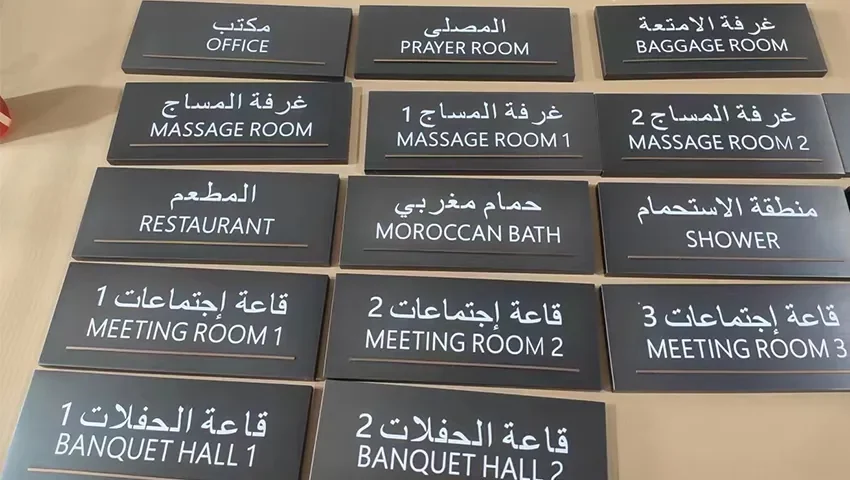
Custom Signage Requires Seamless Integration of Design and Fabrication
The Problem: Fragmented workflows cause brand misalignment and permitting delays
When design and fabrication teams operate in silos, custom signage projects suffer from avoidable missteps. Disjointed hand-offs distort brand colors, fonts, and dimensional specifications—triggering costly re-fabrication and weakening visual consistency across locations. Permitting delays compound the issue: fabricators often lack the design context needed to pre-validate zoning, safety, or accessibility requirements, leading to rejected submissions. A 2022 industry survey found that 34% of custom signage projects faced permit rejections directly tied to communication gaps between disciplines. Without alignment, businesses risk missing critical deadlines—like grand openings—and deliver a fragmented brand experience that erodes customer trust.
The Solution: In-house design–fabrication synergy ensures accuracy, speed, and code compliance
Integrating design and fabrication under one roof eliminates these disconnects. In-house teams collaborate continuously—from concept sketch to installation—sharing live 3D models, material libraries, and real-time fabrication constraints. This enables immediate validation of every design choice against buildability, structural integrity, and local regulatory standards. Fabricators flag potential issues before finalization, preventing rework and accelerating approvals. According to the International Sign Association (2023), this integrated approach cuts revision cycles by 40% and shortens overall project timelines by 25%. Compliance with ADA, UL, and municipal zoning codes becomes intrinsic—not an afterthought—so permits are secured efficiently. The result is high-fidelity custom signage that reflects both brand vision and architectural intent, delivered on time and on budget.
Design Team Expertise Bridges Brand Identity, Architecture, and Regulatory Realities
Architectural collaboration: Co-signing and material continuity for façade-integrated custom signage
Effective façade-integrated signage begins long before fabrication—with early, structured collaboration between sign designers and building architects. When in-house designers join planning meetings, they co-develop mounting systems, structural reinforcements, and electrical integration points before construction starts. This ensures signage materials—aluminum, acrylic, glass, or composite panels—match the building’s cladding in color, finish, thermal expansion, and weathering performance. Joint shop-drawing review and co-signing by both architect and sign maker streamline permitting by resolving aesthetic–structural conflicts upfront. The outcome is signage that reads as an intentional extension of the architecture—not an add-on—preserving both brand coherence and design integrity.
Heritage-aware fluency: Contextual design reduces historic district rejections by 29%
Historic districts demand nuanced responsiveness—not just compliance. Sign makers with in-house heritage-aware designers proactively research a building’s era, original signage typology, and preservation commission guidelines. They select period-appropriate proportions, serif typography for early-20th-century facades, or low-luster brass finishes instead of reflective acrylic for 19th-century storefronts. This contextual fluency yields measurable impact: projects incorporating such research saw a 29% lower rejection rate from preservation commissions (National Trust for Historic Preservation, 2023). By aligning scale, illumination, materials, and detailing with local character from day one, teams avoid redesign delays and uphold brand credibility—without compromising historical stewardship.
In-House Design Cuts Revision Cycles and Accelerates Project Delivery
With design and fabrication co-located, revision loops shrink from days to hours. In a typical scenario, an external designer may require 48 hours just to acknowledge a request for a minor material swap or dimensional adjustment; in an integrated workflow, a shop-floor engineer can consult the designer face-to-face, update the CAD model in real time, and release the file to CNC machinery the same morning. This immediacy removes email latency and vendor coordination bottlenecks—compressing average iteration time from five business days to under one.
Beyond speed, co-location dramatically improves fidelity. When project coordinators, designers, and fabricators review physical prototypes together, technical misinterpretations drop sharply—from an industry-average error rate of ~15% to under 3%. That precision ensures the installed sign matches both the approved render and code requirements—eliminating expensive rework. For time-sensitive rollouts—such as a retailer’s grand-opening façade—the reliability of an in-house pipeline translates directly into on-schedule delivery, budget control, and strengthened client confidence.
FAQ
Why is it important to integrate design and fabrication for custom signage?
Integrating design and fabrication ensures seamless communication, reduces errors, accelerates project timelines, and secures regulatory compliance, all while delivering on-brand signage.
How does architectural collaboration enhance custom signage?
Architectural collaboration ensures materials match the building’s façade, maintaining both aesthetic and structural coherence while streamlining the permitting process.
What role does heritage-aware design play in historic districts?
Heritage-aware design aligns signage with historical context, reducing rejection rates and preserving architectural integrity while reinforcing brand credibility.
How does co-location of design and fabrication improve project delivery?
Co-location reduces revision cycles from days to hours, improves final product accuracy, and minimizes delays by consolidating all processes under one roof.